Books we recommend
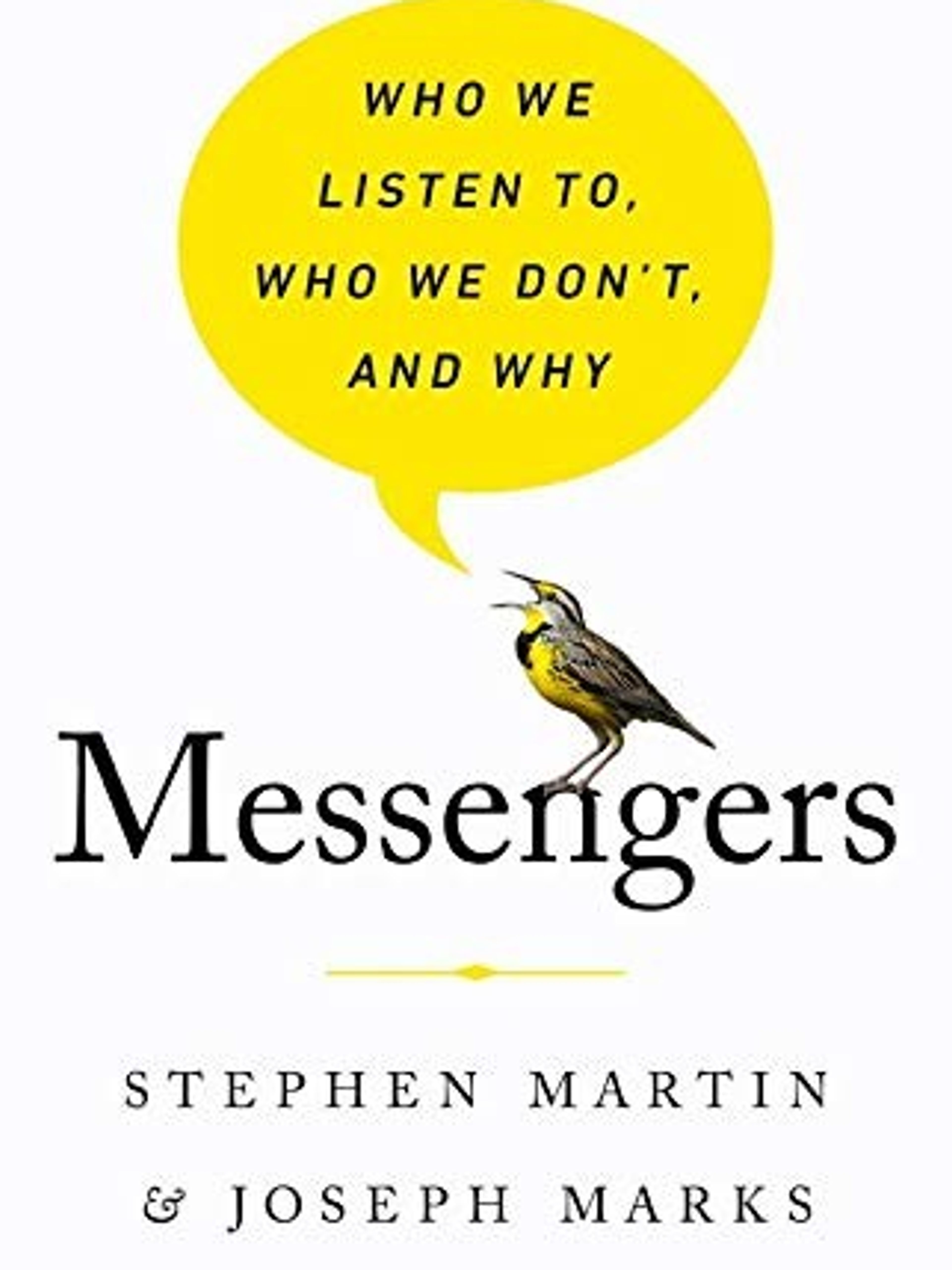
Messengers: Who we Listen To, Who we Don't and Why
Stephen Martin, Joseph Marks
Published 2019
CommunicationLeadership
- Messengers matter as much as messages: who delivers information often shapes decisions more than what is actually said.
- The book outlines eight key messenger traits—such as authority, competence, attractiveness, and warmth—that strongly influence whether people listen and comply.
- We instinctively rely on messenger cues as shortcuts, especially under time pressure or uncertainty, which can lead to both smart and biased decisions.
- Effective leaders and communicators learn to match the right messenger style to the audience and context rather than relying on a single default approach.
- Understanding messenger effects helps you design messages, meetings, and presentations that are more likely to be heard, remembered, and acted upon.
- The same insights reveal how we can be manipulated by the wrong messengers—and how to build defenses against undue influence.
- By becoming more intentional about both the messenger you choose to be and the messengers you choose to follow, you improve communication, leadership impact, and decision quality.
- Messenger effects operate everywhere—from politics and social media to workplaces and families—quietly steering whose opinions are amplified and whose are ignored.
- We tend to overvalue surface cues (status, confidence, appearance) and undervalue substance, which can cause us to follow persuasive but poorly informed messengers.
- Different situations reward different messenger styles: in crises we seek authority and certainty, while in times of change we respond better to warmth, similarity, and shared identity.
- By diagnosing which of the eight messenger traits you naturally lean on, you can adapt your style to be more ethical, effective, and audience‑centric.
- Organizations that consciously design “who speaks when” in meetings, presentations, and decision forums make better choices than those that leave messenger influence to chance.
- Learning to pause and ask “Why am I listening to this person?” helps you separate credibility from charisma and reduces the risk of manipulation.
- Applying these insights turns everyday interactions—briefings, pitches, feedback conversations—into higher‑impact moments where the right voices are heard and acted upon.
Continue your exploration