Books we recommend
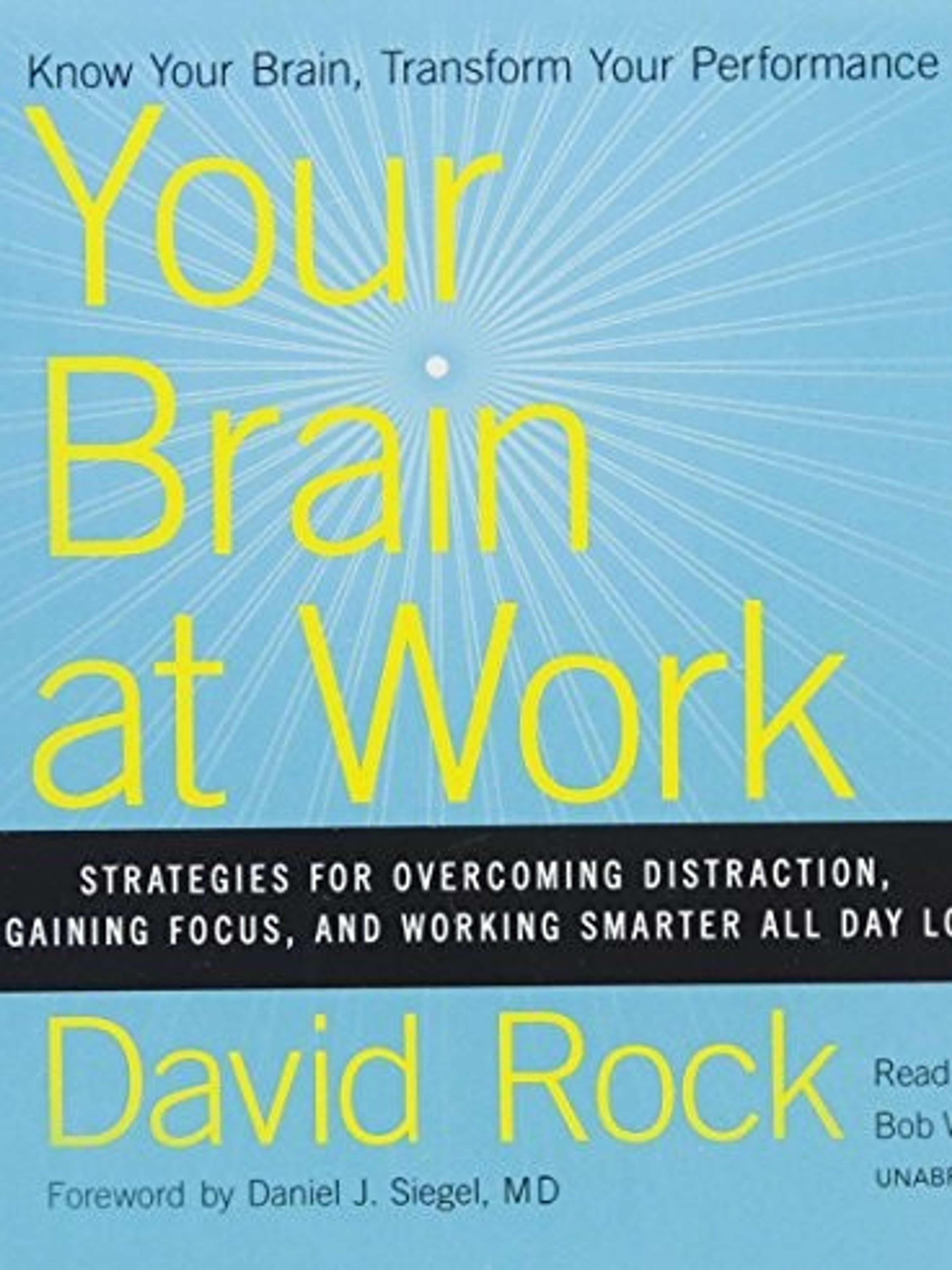
Your Brain at Work: Strategies for Overcoming Distraction, Regaining Focus, and Working Smarter All Day Long
David Rock
Published 2015
Leadership
- Your brain has limited capacity for attention; multitasking and constant context-switching dramatically reduce performance and increase errors.
- Managing your mental "stage"—what you choose to focus on and when—is more powerful than trying to work harder or longer.
- Strong emotions (threat, anxiety, frustration) hijack cognitive resources; learning to reframe situations and label emotions can quickly restore clarity.
- Building habits and routines for recurring tasks frees up working memory for higher-level thinking and creativity.
- Prioritizing deep, focused work in short, protected blocks leads to better decisions and higher-quality output than always being available.
- Social interactions at work are heavily influenced by the brain’s need for status, certainty, autonomy, relatedness, and fairness; respecting these needs improves collaboration and leadership.
- Small changes in how you plan your day—such as doing the hardest thinking work when your energy is highest—compound into major productivity gains over time.
- Becoming aware of how your brain actually works lets you design your environment, schedule, and habits to work with your brain instead of against it.